0:00
Gate and orientation
Confirm what is open, locate toilets, and decide which two tomb experiences matter. Do not let a guide choose your entire day before learning what they will actually show.
Site brief · 02
A long necropolis, not a single pyramid stop. Give the painted rooms and the gaps between monuments enough time to become useful.
Start with the ground
The mistake at Saqqara is treating it as the quiet version of Giza. It is quieter in the obvious sense — fewer people, less sales pressure, more desert between points — but it is denser in another sense. Several thousand years of burials, temples, chapels, experiments, and repairs occupy the same broad shelf. A quick lap produces only the Step Pyramid and a hot car park.
Build a day around three deliberate stops: Djoser’s complex, one painted or carved tomb cluster, and either the Serapeum or a second tomb group. That is enough architecture and enough human-scale evidence to keep the visit from becoming a monument-counting exercise. Add a fourth stop only when the group is still looking rather than merely collecting.
Saqqara sits on the desert edge above the old Memphis region. Look east when you can. The strip of cultivation and the modern sprawl are not distractions from the ancient site; they explain why this position mattered. The desert is close, the floodplain is close, and moving food, people, stone, and ritual goods between them was the actual operating system.
Movement
Times are relative, not a promise about gates or access. Use the sequence. It puts the broad architecture first, the enclosed material while your attention still works, and the departure decision before you are too tired to make one.
Confirm what is open, locate toilets, and decide which two tomb experiences matter. Do not let a guide choose your entire day before learning what they will actually show.
Walk the enclosure as a complex. Notice the boundary and processional space before standing directly under the stepped mass.
Move to a wider vantage. The pyramid is easiest to read when the stacked mastaba logic is visible, not when it fills the entire frame.
Use twenty unhurried minutes in a chapel. Painted scenes reward a slower eye more than a running commentary.
Choose one. Underground corridors and another tomb are both legitimate; trying to sprint through both is not.
Decide whether to continue south to Dahshur before the return road becomes your final attraction.
The useful detail
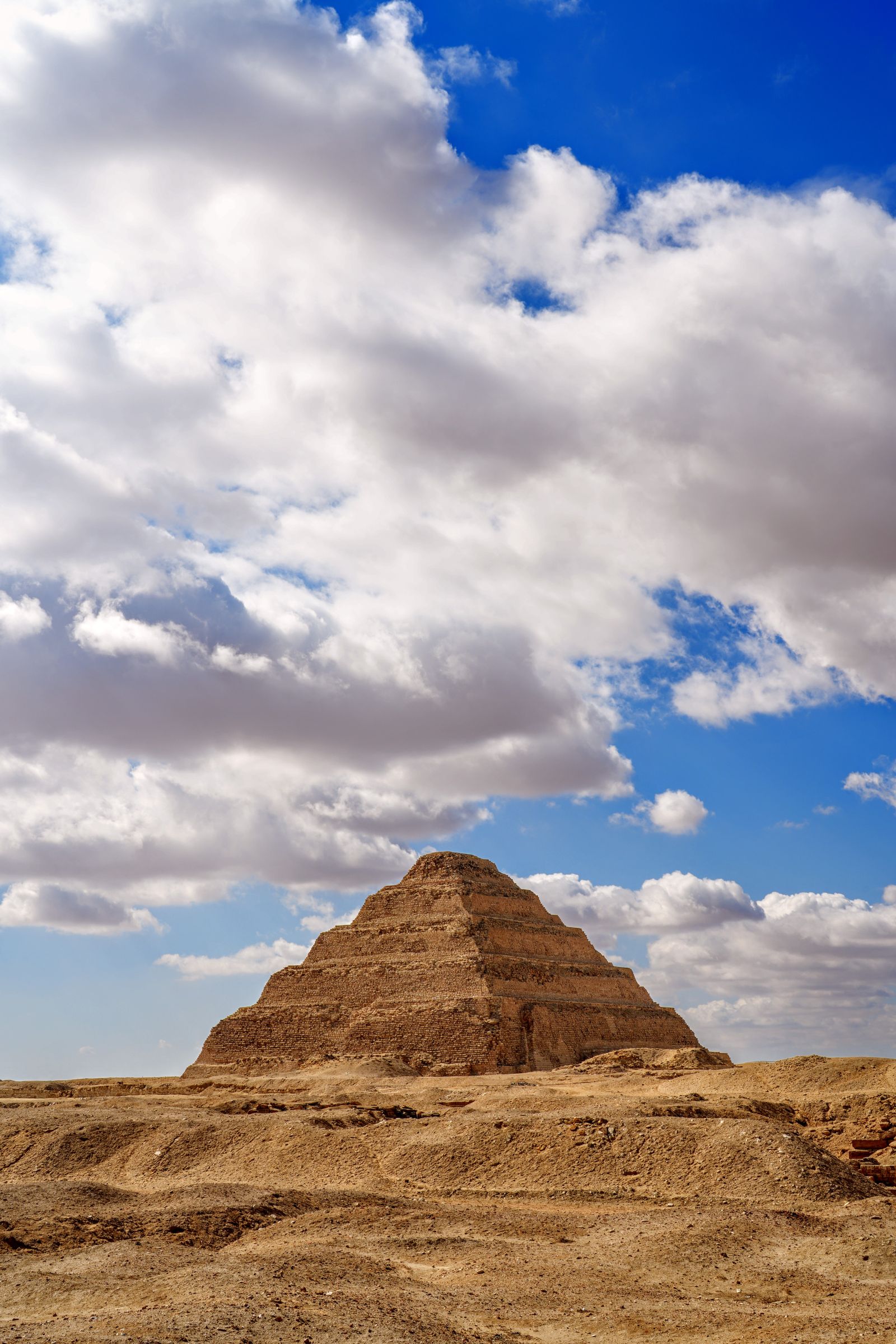
Earlier elite tombs used the mastaba: a low, rectangular building. Djoser’s complex stacks and enlarges that vocabulary into a vertical statement. The obvious result is the stepped outline. The less obvious result is the surrounding architecture, which stages controlled movement, enclosure, and royal ceremony on a scale that still directs your feet.
Do not reduce Imhotep to a name tag and move on. The practical lesson is visible: new forms appear by revising older ones, not by arriving fully formed. At Saqqara you can read the revisions in profile. A good exterior circuit gives you the changing levels, the relationship to the court, and the way the whole complex creates a controlled horizon.
If sunlight is hard, do not complain that it is not cinematic. Strong contrast can make the steps legible. If the light is softer, pull back and use the silhouette. Either way, spend less time attempting a perfect empty frame and more time understanding why this shape was a substantial change in royal building.
Saqqara is where the pyramid still looks like a decision being tested in public.
Field notes
The Step Pyramid proves an idea. The tombs show the people and systems around elite life: preparation of food, animals, boats, labour, offerings, tools, and status. That is why a small chapel can matter more than another wide desert image.
Ask which accessible tomb has the clearest reliefs today, then give it a real pause. A guide who names every figure without explaining the activity is giving you a caption, not context.
Its long underground atmosphere is its own experience. Go when you want the contrast with the open desert; skip it when low, enclosed space will make everyone impatient.
Paint and relief do not improve when touched. Watch bags, keep flash off where required, and do not lean into a doorway to gain two centimetres of camera angle.
Decision table
A smaller, complete route beats a long list with no memory attached. Use this table to cut honestly rather than pretending every stop takes ten minutes.
| If you have | Keep | Skip without regret |
|---|---|---|
| 90 minutes | Djoser exterior, enclosure walk, one viewpoint | Serapeum and distant tomb clusters |
| 3 hours | Djoser, one tomb, Serapeum or second tomb | A rushed detour to every named mastaba |
| Half day | Two tomb experiences and slow exterior reading | Giza on the same schedule |
| Saqqara + Dahshur | Djoser early, Dahshur after water and a break | Late afternoon return improvisation |
Practical line
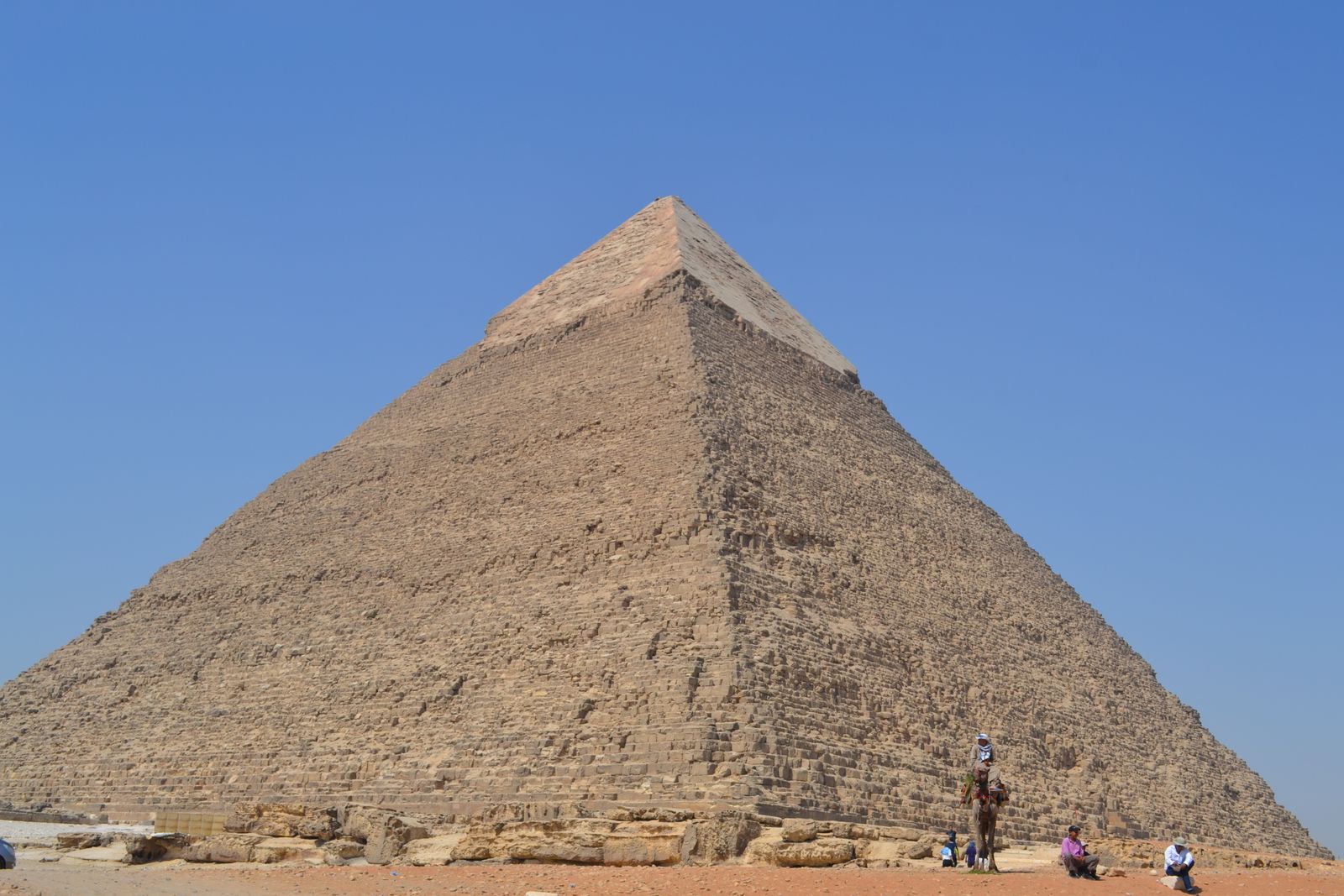
The southern pairing is more than a transport convenience. Saqqara lets you see a stepped solution and a broad cemetery; Dahshur lets you follow the smooth-sided pyramid through its visible adjustments. Together they make a coherent field day. Giza deserves its own early start because its crowd mechanics are different.
Build in a driver buffer. The return route to Nasr City or central Cairo can erase the benefit of a perfectly timed last tomb. Save the contact, set the exit point clearly, and leave before every person in the car is bargaining with the sun.
For planning questions, reach us at +20224023680 or [email protected]. Our listed base is Gameat Al Azhar, Nasr City, Cairo Governorate 4434124, Egypt.
Field appendix
The first useful view of Djoser is rarely the closest one. Stand where the steps separate cleanly, then turn around and look at the enclosure wall, courts, and openings. The point is not that the pyramid is impressive in isolation. The point is that the complex controls approach, movement, and the appearance of royal permanence. A tight crop removes the operating logic.
Tomb relief is easy to photograph badly because low contrast and a phone screen make every scene look flatter than it is. Instead of taking twenty near-identical pictures, pick one register. Identify the action before reading the labels: carrying, slaughtering, rowing, making, offering, counting. Then notice which figures are larger, repeated, or placed at a threshold. The scene becomes evidence rather than decoration.
Use guides as interpreters, not moving walkie-talkies. A useful guide can tell you why one chapel is accessible, what activity a relief shows, and where a later repair interrupts an older surface. They should also be comfortable with silence. If every minute needs an anecdote, you will leave with stories and no visual memory of the walls.
Saqqara’s distances create a false sense that you can improvise indefinitely. In winter that may be merely inefficient. In heat, it changes the entire visit. Set water breaks before you feel thirsty, keep a modest snack, and treat shade as an opportunity rather than a place to conduct a long debate about the next stop.
The best last question at Saqqara is not “what else is famous?” It is “what did I not understand yet?” If the answer is the Step Pyramid’s setting, walk the enclosure again. If it is daily life in the tomb scenes, stay with one chapel. A second pass on a real question beats an extra named stop.
Before the return
Before leaving, take one minute to identify your last confirmed ticket, meeting point, water level, and next destination. This is especially useful when a group has split for an interior, a tomb, or a photo stop. The simplest plan is to name the reunion point aloud and keep the driver contact available rather than assuming a message will arrive through a patchy connection.
Use the exit walk as part of the visit. It is often the first moment when you can notice the horizon, the relationship between built ground and desert, or the effect of late light without trying to solve a queue. A rushed departure turns every final observation into background noise. A planned one gives you a few minutes to decide what was actually worth the time.
Afterward, write down one practical detail that would change a second visit: a route turn, a light window, a ticket sequence, a particularly useful relief, or a point where heat caught up with you. Those notes are more reliable than trying to reconstruct the day from photos later. The best field brief is the one that leaves the next morning easier.
Do a last physical check before the vehicle moves: phone, ticket stubs, hat, water bottle, and camera. It sounds excessively basic because it is. These are the items most often misplaced after a low passage, an impromptu viewpoint, or a crowded gate. Put the next stop into the map before the vehicle starts, confirm the route if it matters, and save any argument about lunch for after everyone is seated. The site day should end with a useful note, not a search through a car park.
There is also a useful distinction between a documented visit and a recorded one. Documentation answers a later question: which approach showed the casing, which tomb had the painted register, where did the ticket check sit, how long did the interior climb take? Recording is simply producing more images. Keep a short note with a time and a location after each major stop. It takes less than a minute and turns vague memories into usable route intelligence. If the day went wrong, write that down too. The heat point, queue, closed room, or traffic bottleneck is exactly the information that makes a future plan less fictional.