Before Djoser
Mastaba vocabulary
Low rectangular tomb forms establish a grammar of enclosure, status, and burial long before a stepped profile rises over Saqqara.

Field context · no sermon
A working timeline for people who would rather read stone than repeat alien stories.
Start with the ground
The purpose of context is not to carry a king list around the plateau. It is to make a visit more precise. When you know that a pyramid belongs to a wider funerary complex, you stop treating the temple, causeway, cemetery, and work evidence as scenery. When you know the smooth-sided form had predecessors and revisions, you stop describing it as if it arrived fully solved.
Start with four questions. What form came before this? What problem is this building answering? What other structures make it operate? What has weathering, reuse, restoration, and tourism changed since it was built? These questions are portable. They work at a major pyramid, a tomb chapel, and a broken wall nobody has put on a souvenir magnet.
There are real uncertainties in ancient history, and uncertainty is not a licence for fantasy. Strong claims need strong evidence. Quarry marks, settlement remains, tools, texts, masonry, and context are not as marketable as secret-chamber talk, but they are why the monuments can be discussed seriously.
Movement
Dates are approximate handles, not magic spells. The point is the progression of form and organisation: existing mastaba logic, the stepped complex, visible adjustment at Dahshur, and the concentrated programme at Giza.
Low rectangular tomb forms establish a grammar of enclosure, status, and burial long before a stepped profile rises over Saqqara.
The Step Pyramid stacks and enlarges an existing form within a much larger ceremonial complex. Look at the enclosure, not only the outline.
Bent and Red Pyramids make design adaptation visible. The classic smooth form becomes an achieved solution rather than a timeless icon.
Pyramids, temples, causeways, cemeteries, and settlement evidence show an integrated royal landscape and large organised workforce.
Casing was removed in places, access altered, repairs made, and modern tourism added another layer. What survives is not untouched.
The evidence is enough to be impressed. It does not need help from a conspiracy theory.
The useful detail
A pyramid requires surveying, quarrying, hauling, placement, finishing, provisioning, administration, and ritual use. It also requires people who can do specialised work and an organisation capable of feeding and coordinating them. That is the useful scale of the question “how did they do it?” — not one impossible lift, but many linked operations.
The old slave-myth shorthand is both inaccurate and dull. Evidence points to a large organised labour force including skilled workers, administrators, and seasonal labour operating within the state. That does not turn the work into a modern workplace or remove the burdens involved. It does make the reality more concrete than a cartoon of anonymous people hauling forever.
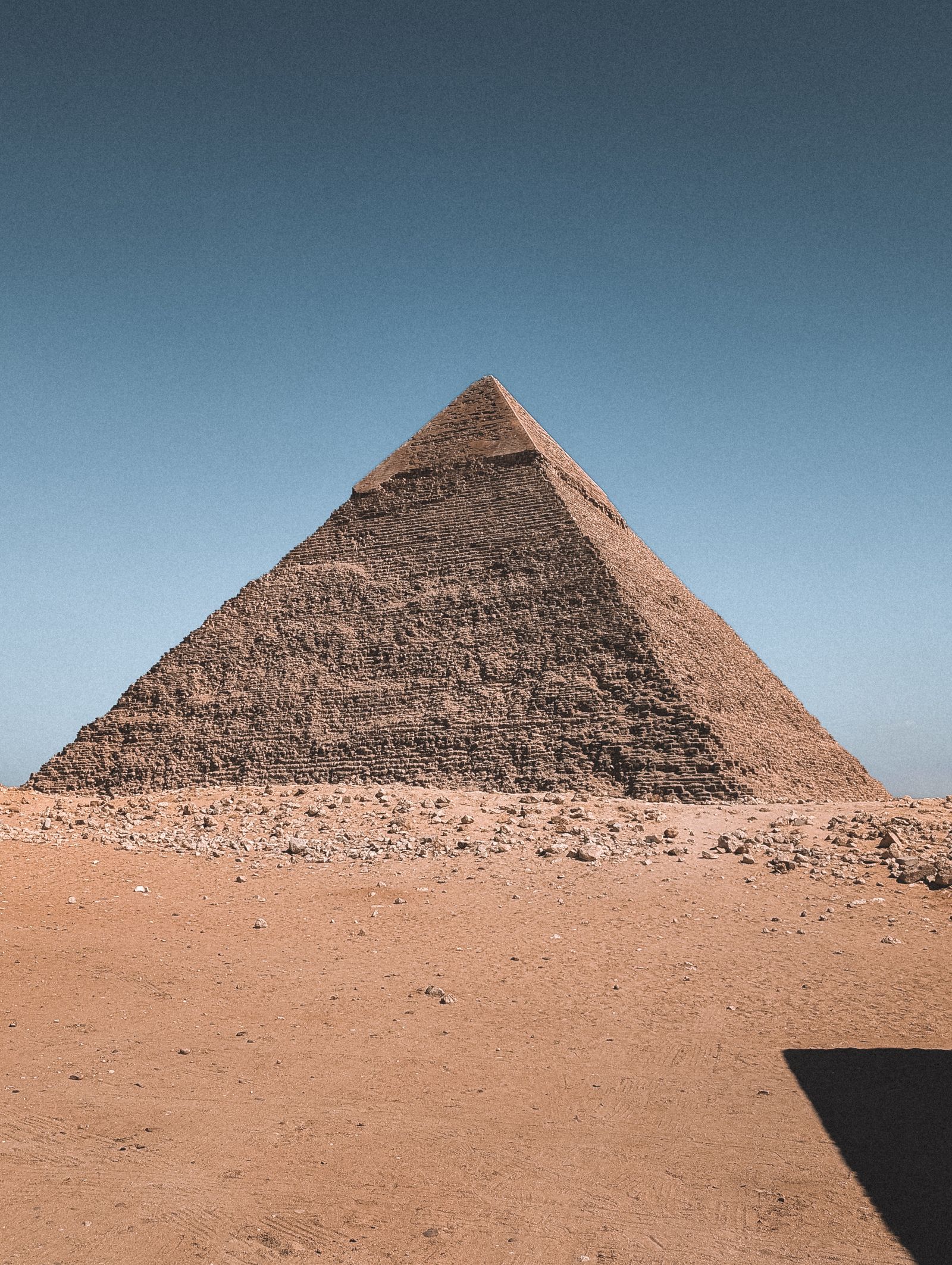
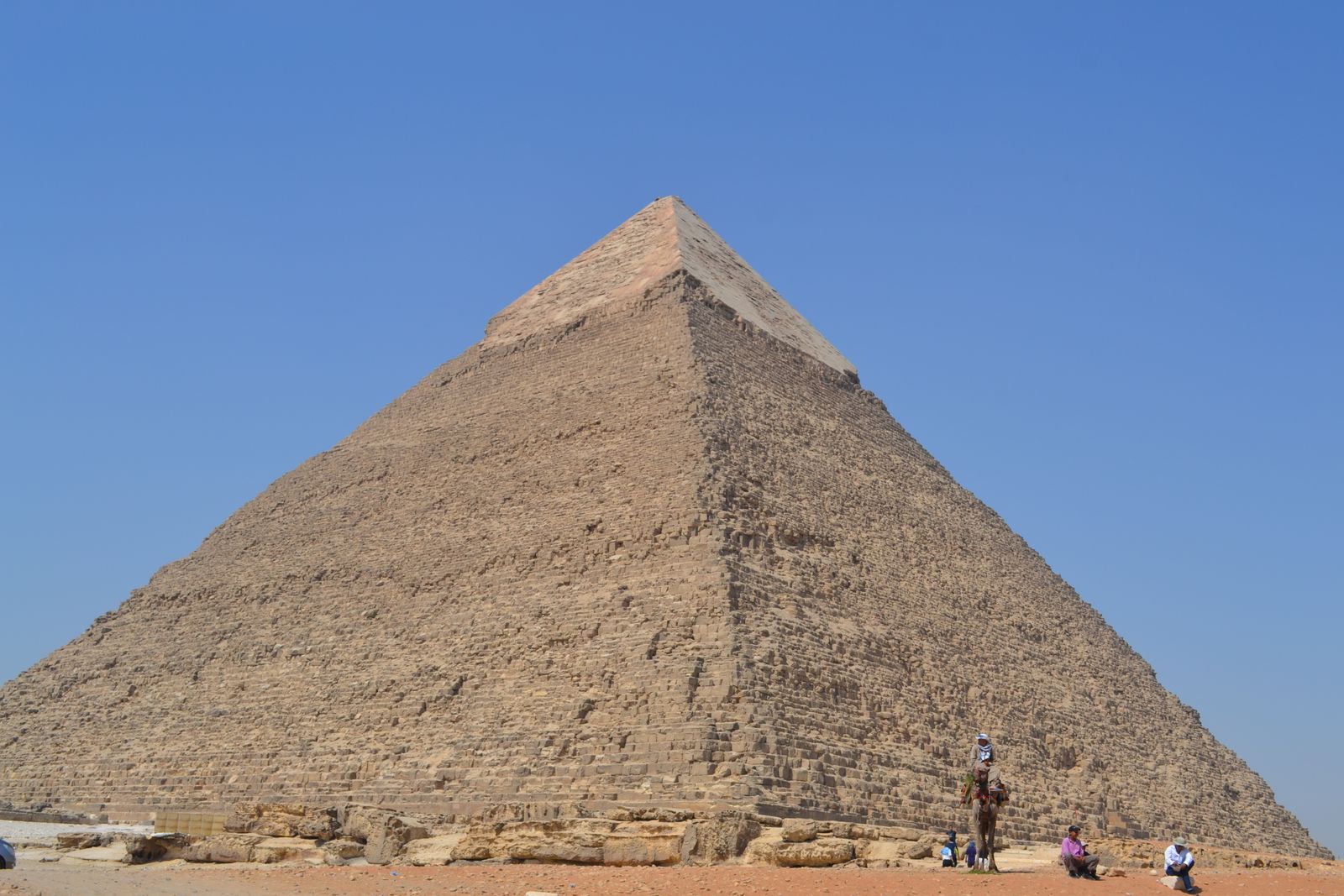
On a visit, look at the difference between core blocks, casing, unfinished surfaces, and repaired areas. Each makes labour visible in a different way. The monument is remarkable partly because these tasks were coordinated at scale, not because ordinary material rules stopped applying.
Mystery begins where the evidence ends. It does not get to erase the evidence first.
Field notes
The most useful historical correction is also the least cinematic: ancient monuments were operating systems. Food, roads, boats, stone, records, labour, and ritual were all part of the same achievement.
At Giza, walk toward the temples and causeways. At Saqqara, keep the enclosure in view. A pyramid alone is only the tallest surviving part.
Missing casing, rough core, and altered entrances are evidence of later history, not proof that the original was careless.
A site plaque gives you a name and date. The architecture gives you the scale, sequence, and physical problem. Use both.
Decision table
These are not competing “takes.” They are practical distinctions that stop a visit from collapsing into a list of grand but empty adjectives.
| Shortcut | Better reading | Use it at |
|---|---|---|
| “Perfect pyramid” | A refined form with visible predecessors and adjustments | Dahshur |
| “One object in sand” | A centre of temples, routes, burials, and logistics | Giza |
| “Slave-built mystery” | Organised workforce and specialised systems | All sites |
| “Untouched ancient ruin” | A monument changed by reuse, weather, repair, and tourism | Every exterior |
Practical line
At Saqqara, look for the mastaba logic transformed into a stepped mass and enclosed complex. At Dahshur, use the angle change to think about revision under pressure. At Giza, look outward from the pyramid to the linked landscape. That is enough context to make your photographs, walking route, and questions sharper.
Do not perform expertise by reciting every dynasty. The right level of preparation is knowing what to look for and being willing to change your first impression when the stone disagrees. For current travel logistics rather than ancient facts, use the Egypt Quick contact line below.
For planning questions, reach us at +20224023680 or [email protected]. Our listed base is Gameat Al Azhar, Nasr City, Cairo Governorate 4434124, Egypt.

Field appendix
Begin with the building itself. What material is visible? Which surface looks finished, cut back, repaired, or stripped? Where does a path lead, and where does it stop? These questions sound plain because they are. They pull interpretation back toward observable details before a guidebook or video supplies a grand theory for you.
Then look for relationships. A pyramid’s orientation, causeway, valley temple, mortuary temple, subsidiary burials, and nearby settlement evidence are not a background collage. They describe how the monument was approached, supplied, and used. The isolated-triangle image is a modern visual habit, not the site’s original operating condition.
Be careful with words such as “first,” “largest,” and “perfect.” They are convenient for labels but poor tools for thought. A first can have predecessors, a largest can be less informative than a smaller experiment, and perfect usually means the speaker has not walked around the building long enough to see a repair, a missing surface, or a changed angle.
Historical caution does not mean refusing to say anything. It means matching confidence to evidence. We know a great deal about royal building, settlement, material practice, and sequence; we also have unanswered questions. The honest boundary between the two is where archaeology becomes more interesting, not less.
Use the chapters on Saqqara, Dahshur, and Giza as three field exercises. At each, choose one thing that is not the headline object — a court, casing patch, threshold, causeway line, or tomb scene — and explain to yourself how it changes the whole. That is a better souvenir than a mystery slogan.
Before the return
Before leaving, take one minute to identify your last confirmed ticket, meeting point, water level, and next destination. This is especially useful when a group has split for an interior, a tomb, or a photo stop. The simplest plan is to name the reunion point aloud and keep the driver contact available rather than assuming a message will arrive through a patchy connection.
Use the exit walk as part of the visit. It is often the first moment when you can notice the horizon, the relationship between built ground and desert, or the effect of late light without trying to solve a queue. A rushed departure turns every final observation into background noise. A planned one gives you a few minutes to decide what was actually worth the time.
Afterward, write down one practical detail that would change a second visit: a route turn, a light window, a ticket sequence, a particularly useful relief, or a point where heat caught up with you. Those notes are more reliable than trying to reconstruct the day from photos later. The best field brief is the one that leaves the next morning easier.
Do a last physical check before the vehicle moves: phone, ticket stubs, hat, water bottle, and camera. It sounds excessively basic because it is. These are the items most often misplaced after a low passage, an impromptu viewpoint, or a crowded gate. Put the next stop into the map before the vehicle starts, confirm the route if it matters, and save any argument about lunch for after everyone is seated. The site day should end with a useful note, not a search through a car park.
There is also a useful distinction between a documented visit and a recorded one. Documentation answers a later question: which approach showed the casing, which tomb had the painted register, where did the ticket check sit, how long did the interior climb take? Recording is simply producing more images. Keep a short note with a time and a location after each major stop. It takes less than a minute and turns vague memories into usable route intelligence. If the day went wrong, write that down too. The heat point, queue, closed room, or traffic bottleneck is exactly the information that makes a future plan less fictional.