24–35mm equivalent
Useful near the Sphinx and close pyramid faces. Go too wide and the pyramid becomes a novelty wedge; step back if the route permits.
Camera field notes
Giza is large, bright and crowded. The useful tactic is fewer frames with an actual reason.
Time has jobs
Early light is for broad relationships: pyramid, desert, sky, scale. Midday is for texture, shadow, interior work or a stop. Late light can be excellent, but only if access and traffic give you a real window rather than five anxious minutes beside a closing route.
The common mistake is to make every frame a wide “I was here” image. Give yourself a sequence instead: one establishing frame, one face or casing detail, one human-scale frame, and one image of the site behaving as a working public place.
Useful near the Sphinx and close pyramid faces. Go too wide and the pyramid becomes a novelty wedge; step back if the route permits.
The honest walking lens: enough geometry, enough context, and no need to turn every course of stone into visual theatre.
Useful for casing lines, compressed profiles and removing crowd clutter. It is heavy; carry it only when you will use it.
Excellent for notes, reference frames and quick wide work. Clean the lens. Dust is not a colour grade.
Bring one spare battery, a microfiber cloth in a sealed pouch, and a cover simple enough to use. A tripod or commercial-looking setup can create questions; verify current rules before assuming a public monument is your private studio.
Giza geometry
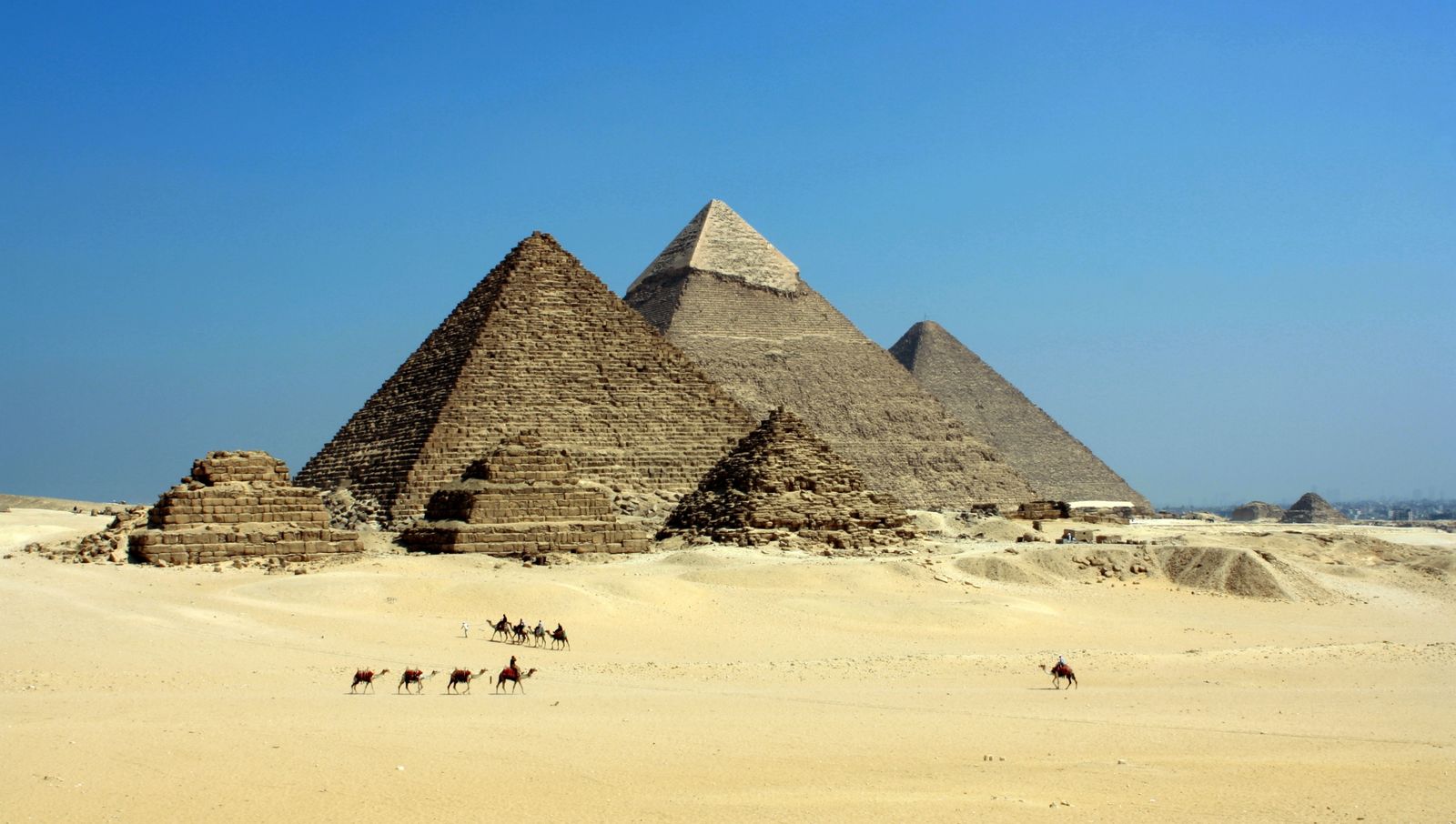
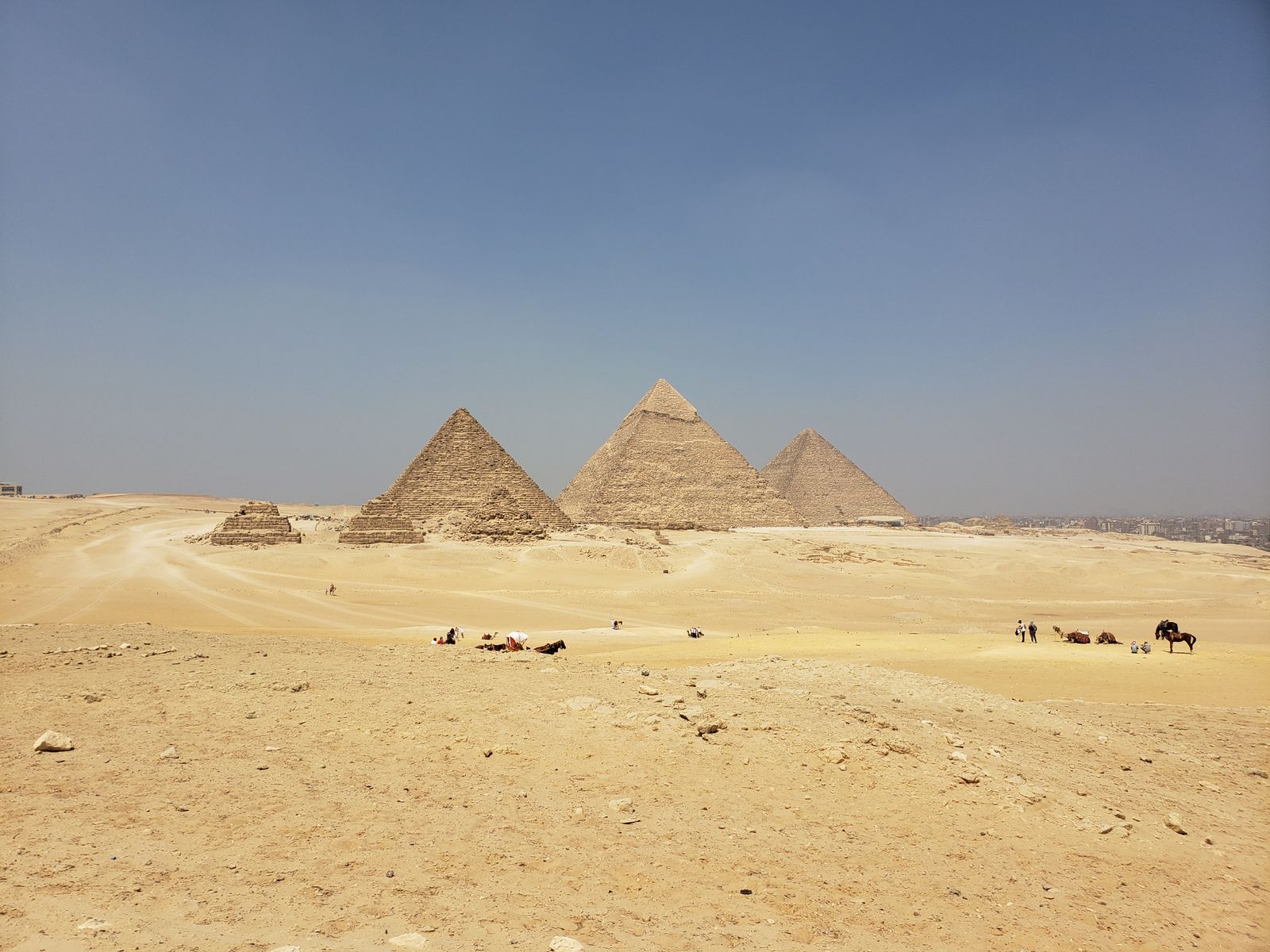
Before going close, make one frame that explains how the three major pyramids sit together. Move until edges do not merge awkwardly. A few metres change the whole argument.
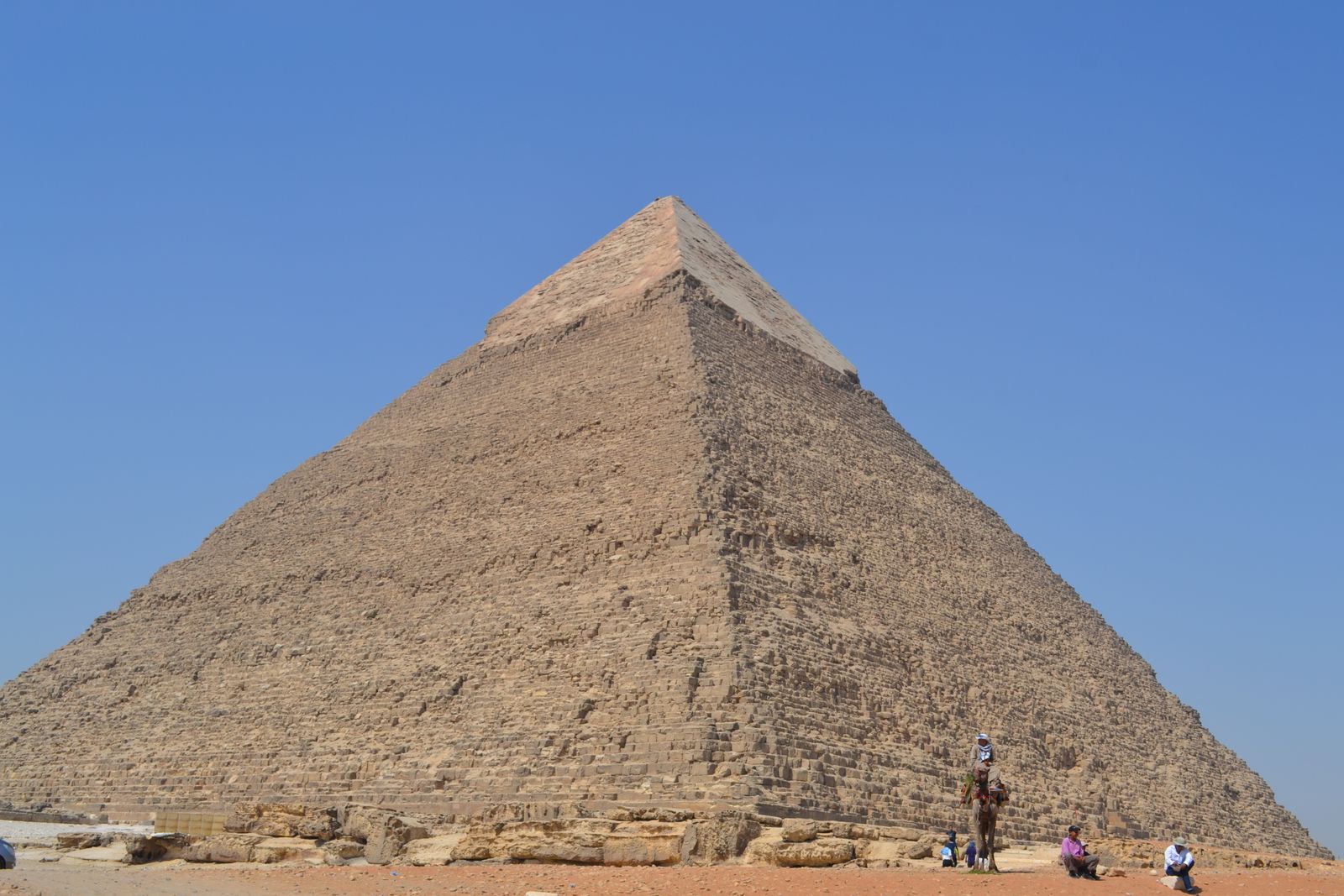
Its surviving cap is surface and scale. A normal or short tele view isolates the transition better than forcing the whole pyramid into every shot.
One walker can establish size. A random crowd becomes visual lint. Wait briefly, compose, then shoot; do not direct strangers into your frame.
Desert-side positions simplify the horizon. City-facing positions can be strong when you deliberately include the pressure of Cairo rather than pretending it is absent.
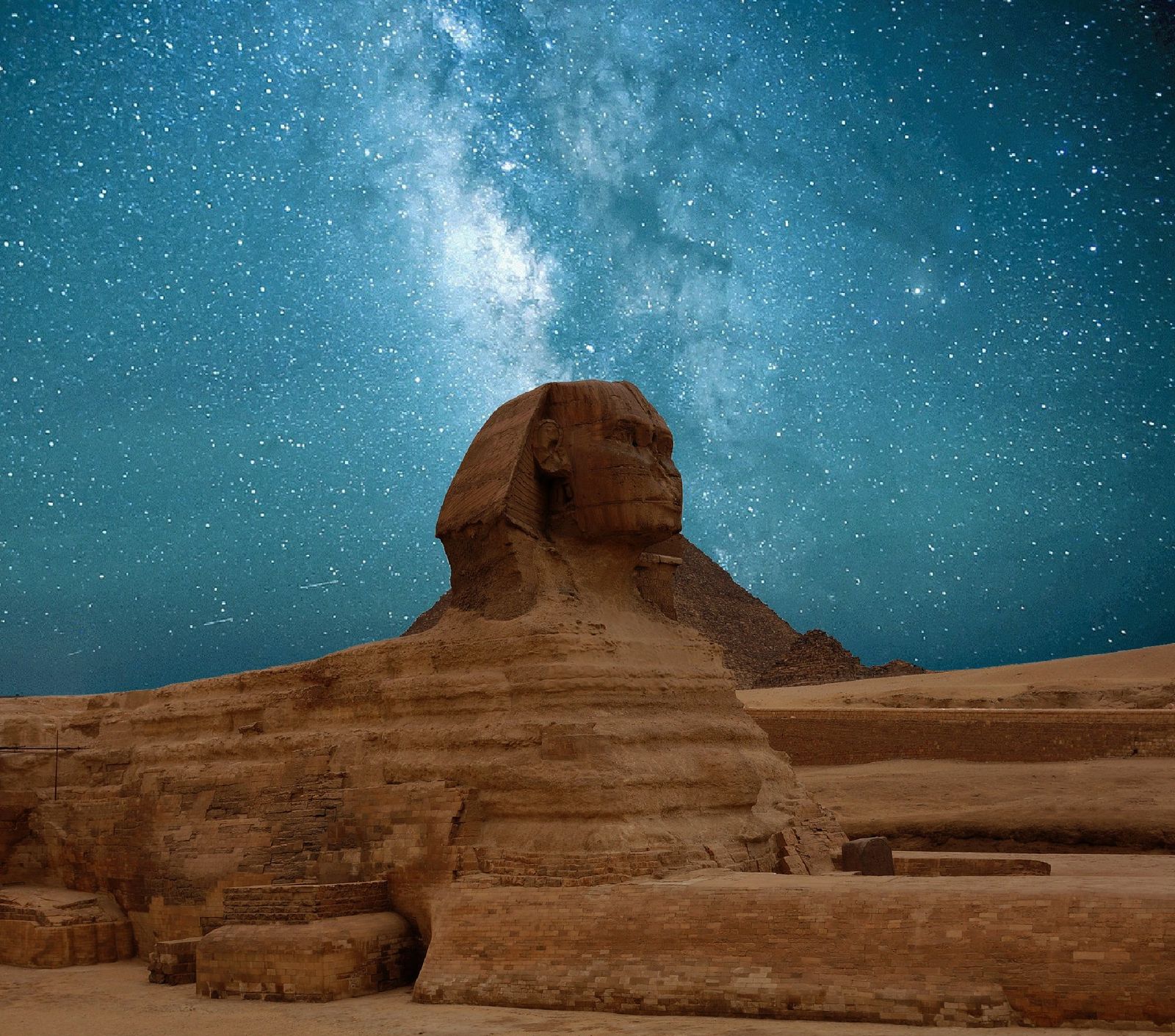
The Sphinx works best with its enclosure, processional logic or a controlled sliver of pyramid behind it. A long-lens headshot may be amusing but says little about where it lives. Work from permitted paths, watch rails and bus groups in the background, and compose before raising the camera.
At a normal focal length, place the Sphinx on one side and retain surrounding stone for scale. Vertical works only if the pyramid relationship stays legible.
Waiting for absolute emptiness at the famous spot. It may not arrive. Make a photograph with honest site life, then move on.
Saqqara
The Step Pyramid rewards walking its perimeter before selecting an angle. Its layers, thresholds and adjacent work give you more to photograph than a single hero view. In hard light, move closer: joints, changes in stone, edges of restoration and the relation between visitor paths and old structure.
Do not treat every tomb as a dark-room challenge. Respect rules, other visitors and fragile surfaces. If an interior is busy, make an exterior sequence instead of blocking a narrow passage while changing settings.
Dahshur
The Bent Pyramid’s slope change is the subject. Stand far enough back for the profile to read, then make a second image explaining the surrounding empty ground. Do not crop away the strange feature that makes the drive worthwhile.
The Red Pyramid benefits from restraint: clean foreground, uncluttered sky and a normal lens can do more than an elaborate setup. If you enter, secure the camera, respect the narrow passage and do not stop traffic for footage.
At Dahshur, quiet is not permission to behave as if nobody else will arrive.
Working notes
These are the small decisions that do not look important on a booking page and tend to become important in the sun, at a gate, or when a car is already pointed the wrong way.
A clean establishing frame is usually made before the first crowd wave, so walk with the camera ready rather than still deciding on settings. The useful response is to decide this before the pressure arrives, keep the instruction short, and preserve enough time to change course without turning the group against the day.
At Giza, the best composition may be five metres away from the established selfie line; move before you assume the angle is fixed. The useful response is to decide this before the pressure arrives, keep the instruction short, and preserve enough time to change course without turning the group against the day.
Do not use an ultra-wide lens merely because the monument is large; it can make a pyramid look smaller and stranger. The useful response is to decide this before the pressure arrives, keep the instruction short, and preserve enough time to change course without turning the group against the day.
A normal lens is often the better way to show scale because it keeps the surrounding ground and people believable. The useful response is to decide this before the pressure arrives, keep the instruction short, and preserve enough time to change course without turning the group against the day.
When the sky is weak, let the limestone surface and its shadows become the subject instead of forcing empty blue space. The useful response is to decide this before the pressure arrives, keep the instruction short, and preserve enough time to change course without turning the group against the day.
At Saqqara, take time to photograph steps, thresholds and repetition before searching for a single obvious poster frame. The useful response is to decide this before the pressure arrives, keep the instruction short, and preserve enough time to change course without turning the group against the day.
At Dahshur, leave room around the Bent Pyramid; the changed slope needs space to read as an idea. The useful response is to decide this before the pressure arrives, keep the instruction short, and preserve enough time to change course without turning the group against the day.
For the Sphinx, the enclosure and nearby architecture are often more useful than trying to isolate a face from all context. The useful response is to decide this before the pressure arrives, keep the instruction short, and preserve enough time to change course without turning the group against the day.
A lens hood helps against flare and dust, but it does not replace checking the front element after a windy walk. The useful response is to decide this before the pressure arrives, keep the instruction short, and preserve enough time to change course without turning the group against the day.
If people enter the frame, decide whether they provide scale; if not, wait for a clean interval instead of cloning reality later. The useful response is to decide this before the pressure arrives, keep the instruction short, and preserve enough time to change course without turning the group against the day.
Ask before close portraits, especially when a guide, worker or animal handler has become central to the image. The useful response is to decide this before the pressure arrives, keep the instruction short, and preserve enough time to change course without turning the group against the day.
Drones, climbing and barrier creep are not creative solutions. They are a fast way to create a rule problem for everyone. The useful response is to decide this before the pressure arrives, keep the instruction short, and preserve enough time to change course without turning the group against the day.
Working notes
These are the small decisions that do not look important on a booking page and tend to become important in the sun, at a gate, or when a car is already pointed the wrong way.
Use the period after a bus group leaves to make a simpler frame, not to rush into an angle you have not considered. The useful response is to decide this before the pressure arrives, keep the instruction short, and preserve enough time to change course without turning the group against the day.
If a photograph needs a rule breach, a barrier crossing or an unpaid subject, it is not a field photograph worth keeping. The useful response is to decide this before the pressure arrives, keep the instruction short, and preserve enough time to change course without turning the group against the day.
Review the frame at shade or in the car; editing on the route costs light and attention. The useful response is to decide this before the pressure arrives, keep the instruction short, and preserve enough time to change course without turning the group against the day.
Before the first frame, decide whether this stop is for a wide relationship, a detail study or people in context; that decision eliminates pointless shooting. The useful response is to decide this before the pressure arrives, keep the instruction short, and preserve enough time to change course without turning the group against the day.