0:00
Gate & refuse the first offer
Water check. Ticket extras decided now, not later. Walk past the first cluster of rides without negotiating. Your job is to see the ground plane.
Site brief · 01
Treat it like a working site with bad incentives and excellent stone. The morning is won or lost in the first forty minutes.
What you are standing on
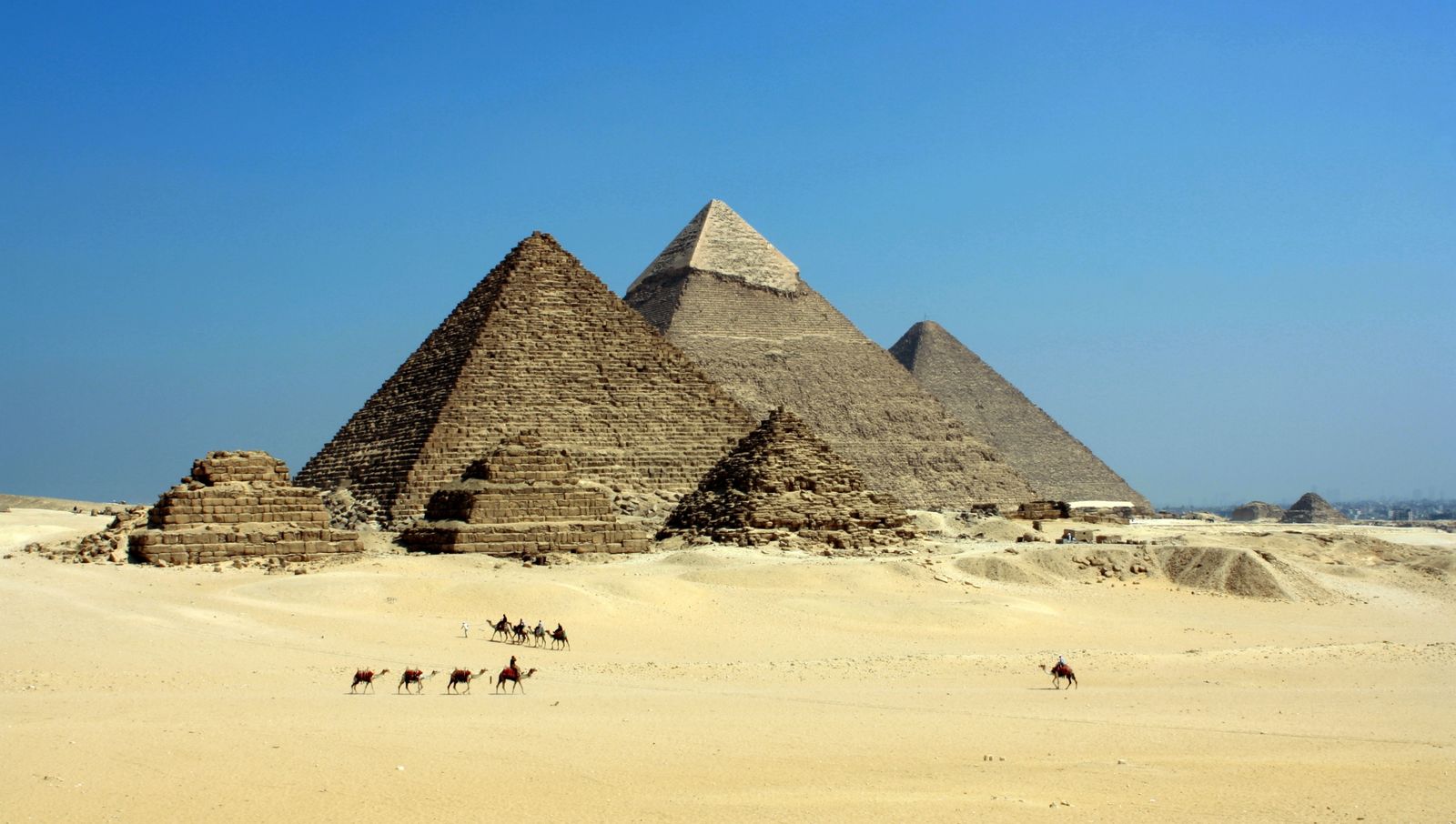
Giza is not a single monument with a gift shop. It is a Fourth Dynasty cemetery engineered for permanence, later wrapped in roads, ticket booths, horse stands, and photo choreography. If you arrive expecting a quiet desert epiphany, the first vendor wave will feel like a personal insult. If you arrive expecting a managed plateau with competing interests, you can move through it cleanly.
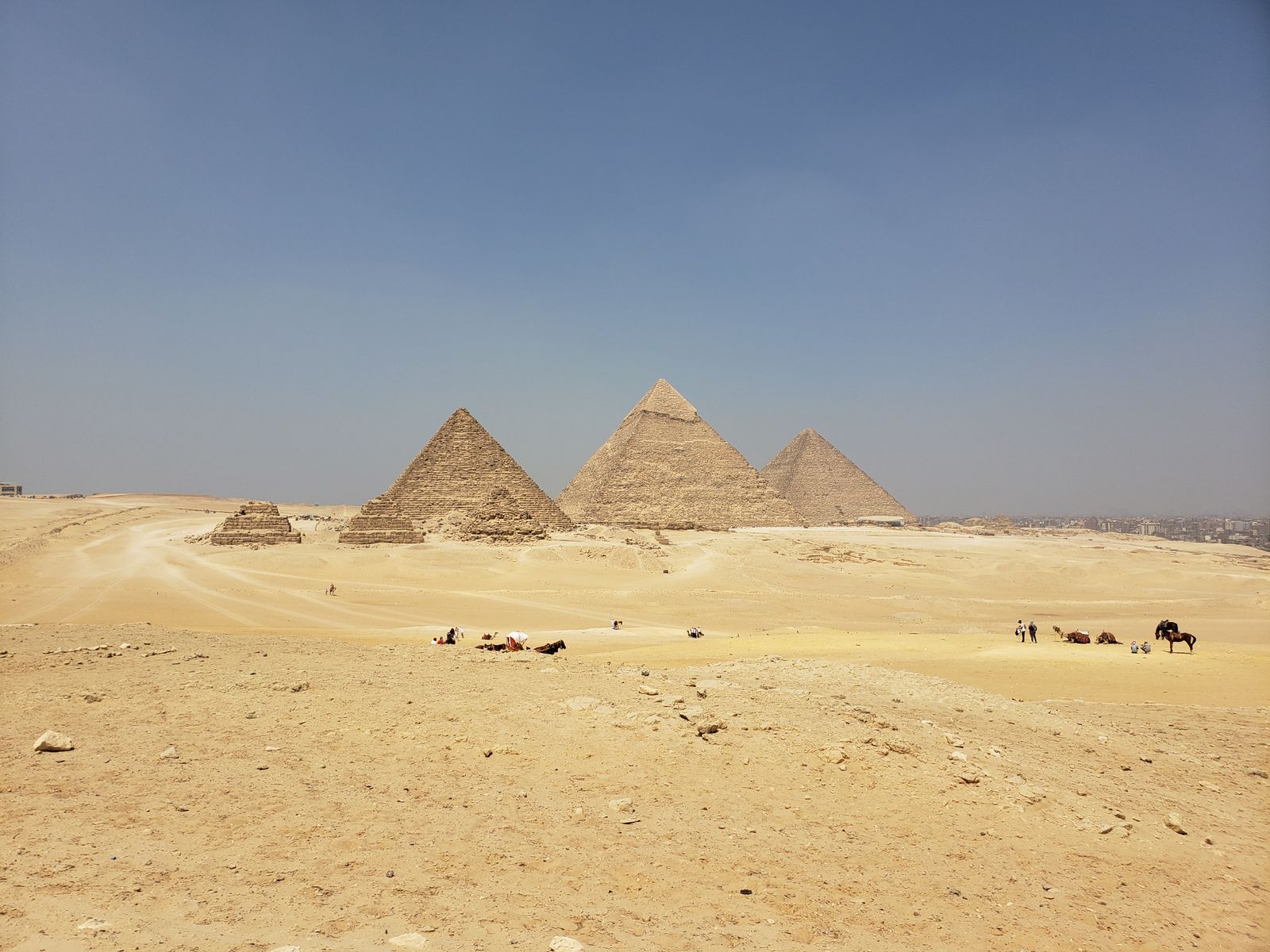
The three main pyramids — Khufu, Khafre, Menkaure — sit on a limestone rise west of the Nile’s old floodplain. Cairo presses against the edge. That adjacency is part of the experience: you do not “escape the city” so much as step onto a shelf of stone that the city has never fully swallowed.
The plateau rewards people who walk with a plan and punish people who outsource every decision in the first ten minutes. Camel offers, panorama packages, “closed today but I know a way,” and urgent friendship are not unique to Giza — they are simply louder here because the site is louder.
Movement
We recommend this sequence for most first visits entering from the main visitor flow. Adjust only if you have a specific light goal (early Sphinx side-light) or an interior ticket with a fixed entry pressure.
Water check. Ticket extras decided now, not later. Walk past the first cluster of rides without negotiating. Your job is to see the ground plane.
Read block size and the human traffic pattern around the entrance zone. If doing the interior, this is where the queue reality becomes non-theoretical.
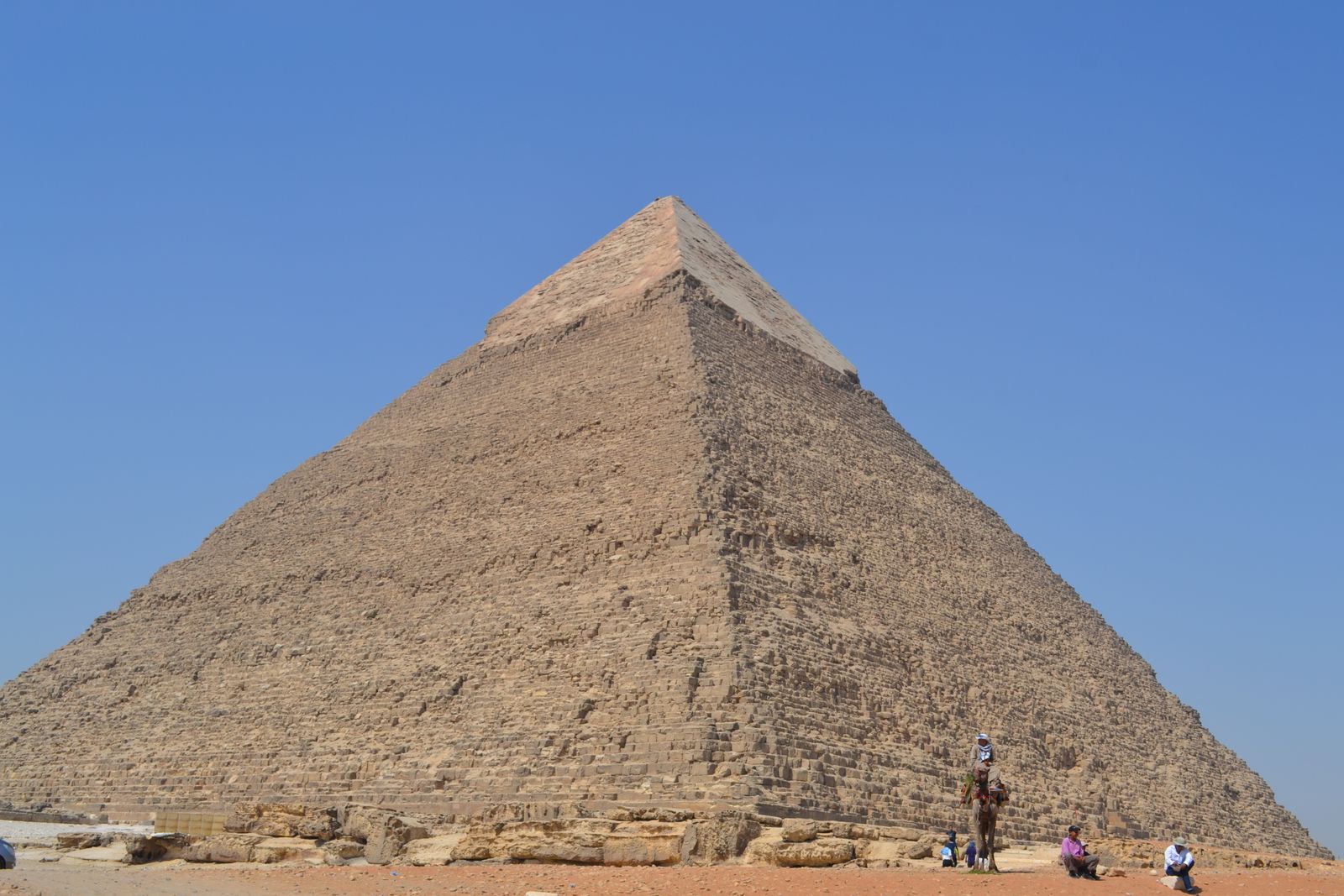
Stop far enough back that both masses sit in one frame. This is where you learn Khafre’s casing cap is a visual trick, not a height contest you need to win.
If you want elevation, walk or hire with a named end point and a price locked before mounting. “Good view” is not a destination.
Ten quiet minutes. Look at the granite casing attempt at the base. This is process evidence, not a lesser souvenir.
Shoot wider than the face. Leave thirty minutes earlier than your Cairo appointment suggests. The ring road does not care about your histogram.
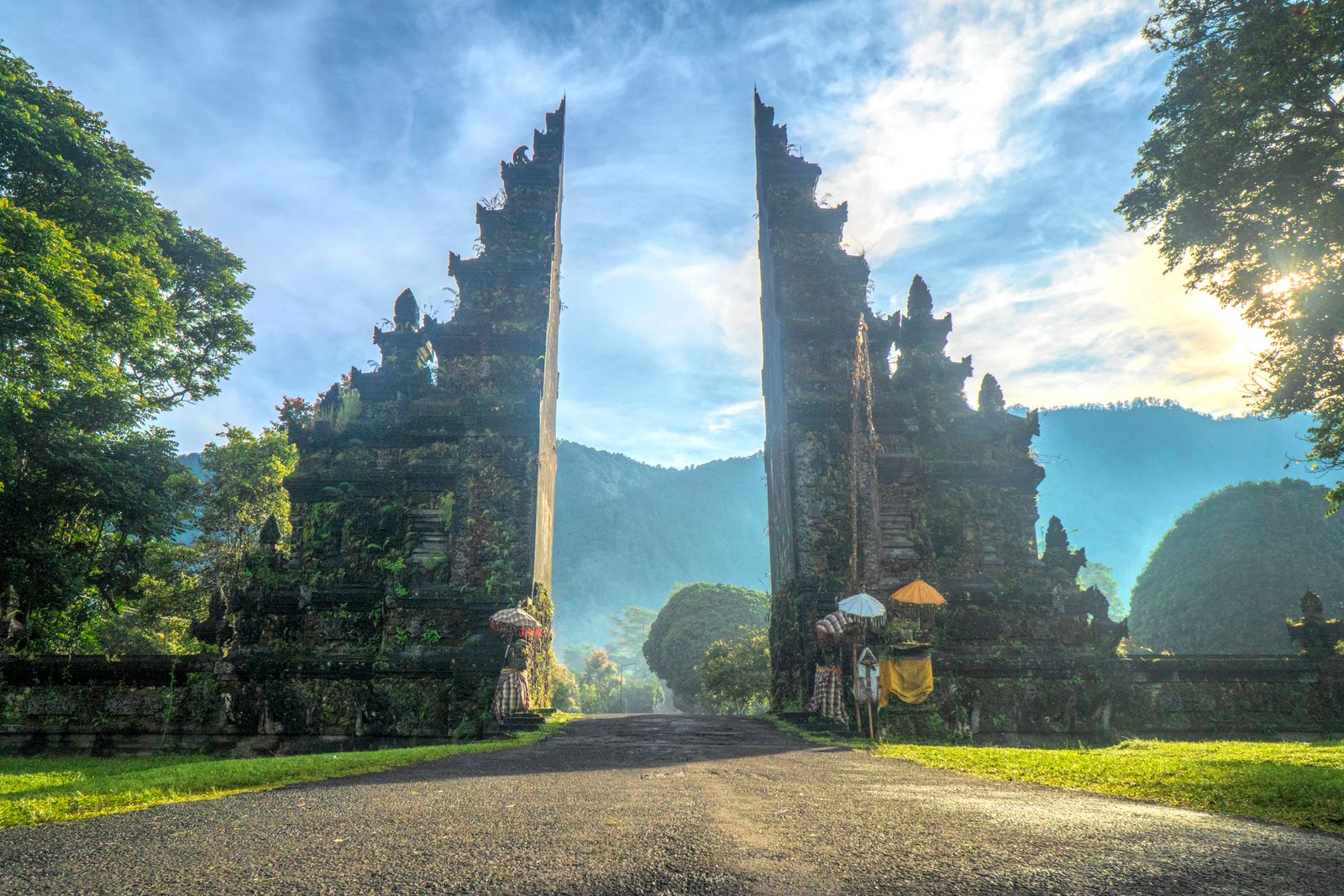
Read each one differently
Visitors often treat the trio as a single object photographed from three distances. Better: give each pyramid a job. Khufu teaches scale and crowd physics. Khafre teaches composition and the surviving casing. Menkaure teaches unfinished intention — the part of Egyptian building that still looks like work.
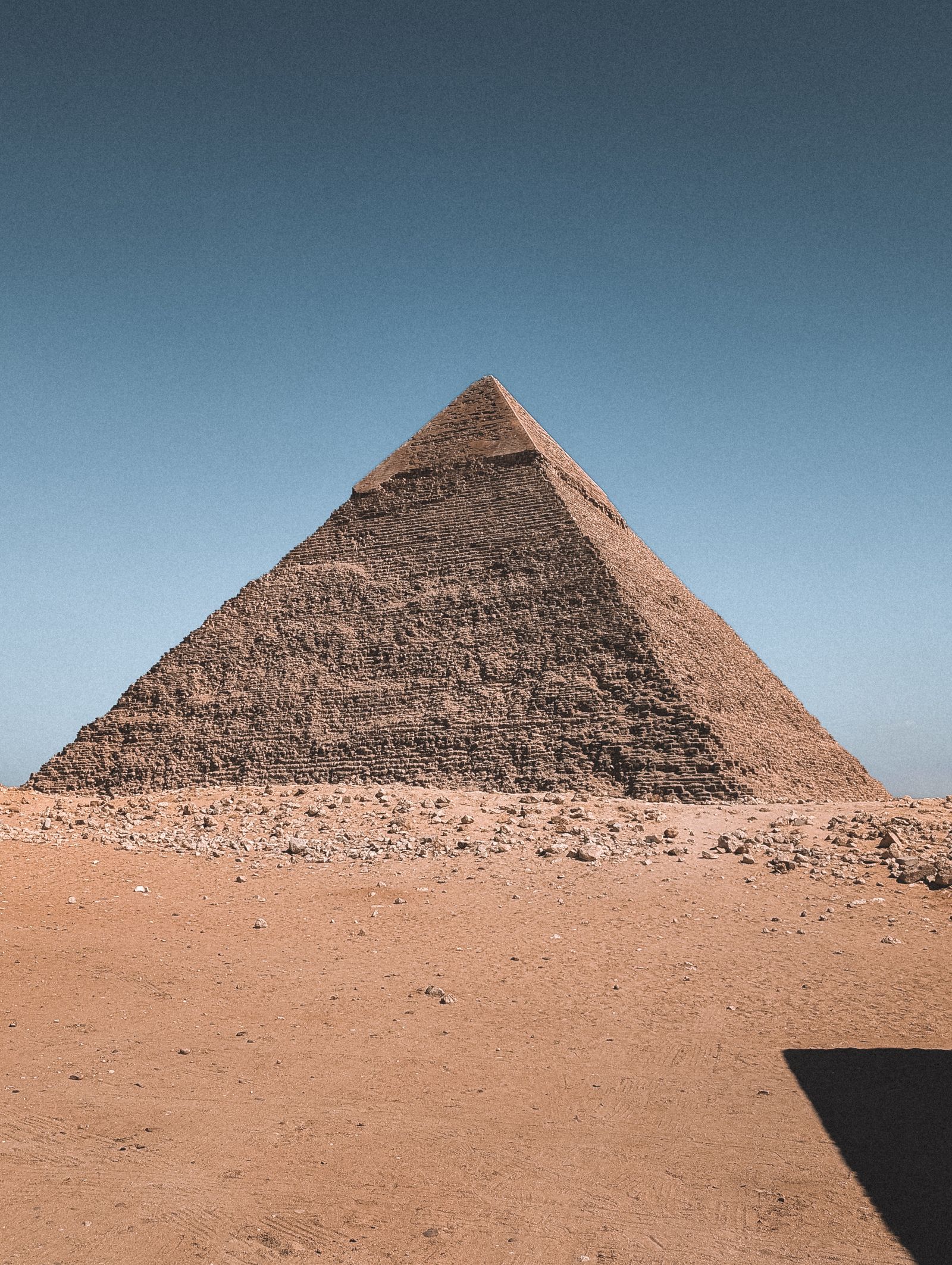
Stand off-axis. The postcard dead-center shot flattens the courses. Walk the east side for masonry rhythm, then pull back until people become scale marks. If the interior is on your list, decide before you fall in love with the exterior light — the queue will not wait for your muse.
The remaining smooth casing at the apex fools almost everyone. From several western angles it looks taller than Khufu. It is not. Use that optical lie: it is one of the plateau’s best lessons in how ruins edit themselves for the eye.
Skipped by groups racing the Sphinx line. The incomplete granite casing at lower levels is worth more attention than another identical wide shot. If you only “have five minutes,” spend them here rather than buying a fourth identical Khufu frame.
A pyramid is not a logo. Walk until the logo dissolves into courses, joints, and repair.
Inside
Romance dies in the first low passage. What remains is humidity, incline, and the sound of strangers breathing in a stone throat. That can be exactly what you want — a bodily reminder that these were not viewing platforms. It can also be a poor use of a cool morning if you are tall, claustrophobic, recovering from illness, or traveling with someone who will hate every minute and say so.
Availability rotates. Capacity is finite. Buying the decision after you have already burned an hour on camel negotiation is how people end up angry at limestone. If Khufu’s interior is essential, make it the spine of the morning and let the rest of the loop flex. If it is merely “nice to have,” compare it with the Red Pyramid at Dahshur, where the climb often feels more direct and less socially compressed.
Enclosure physics
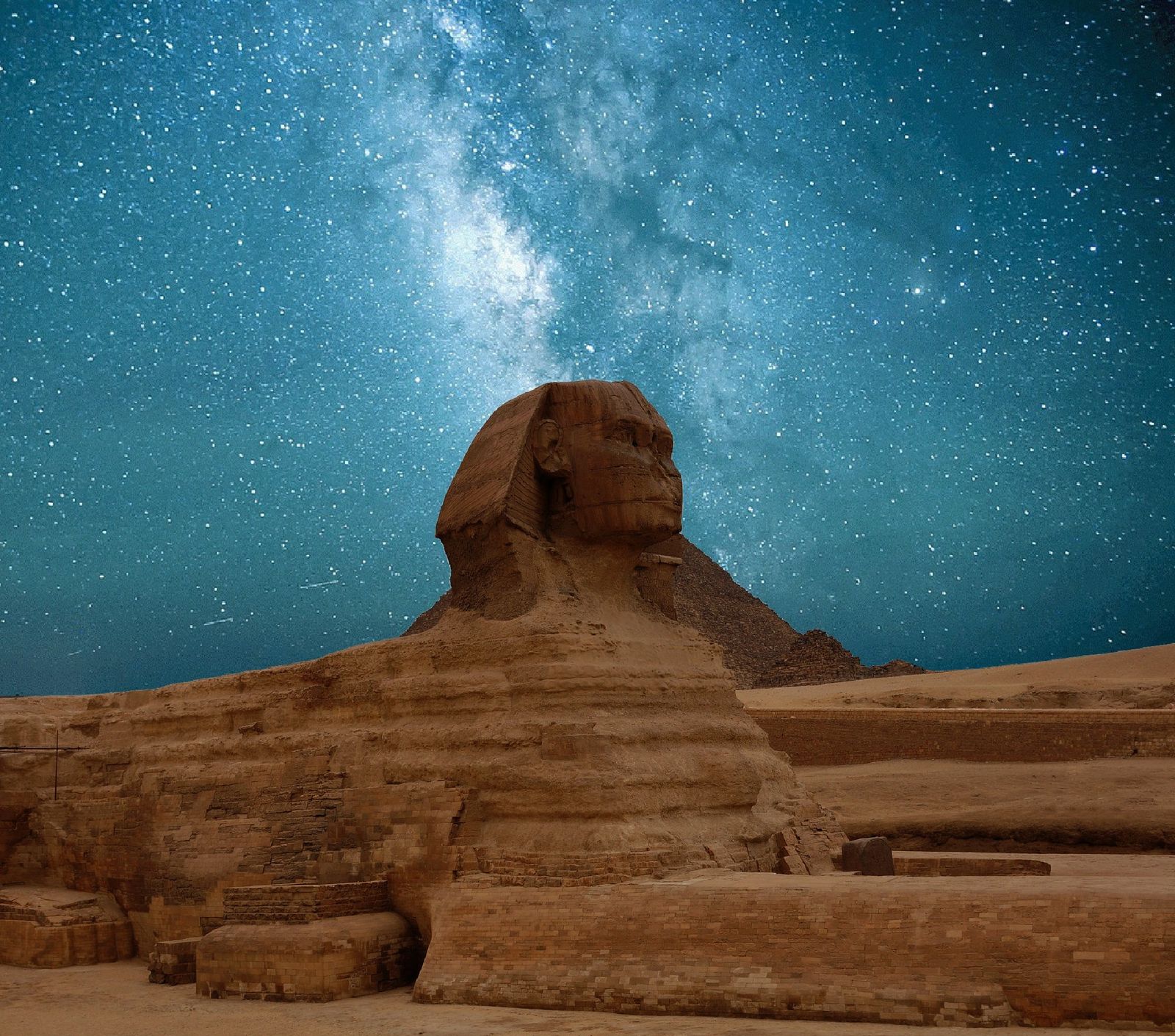
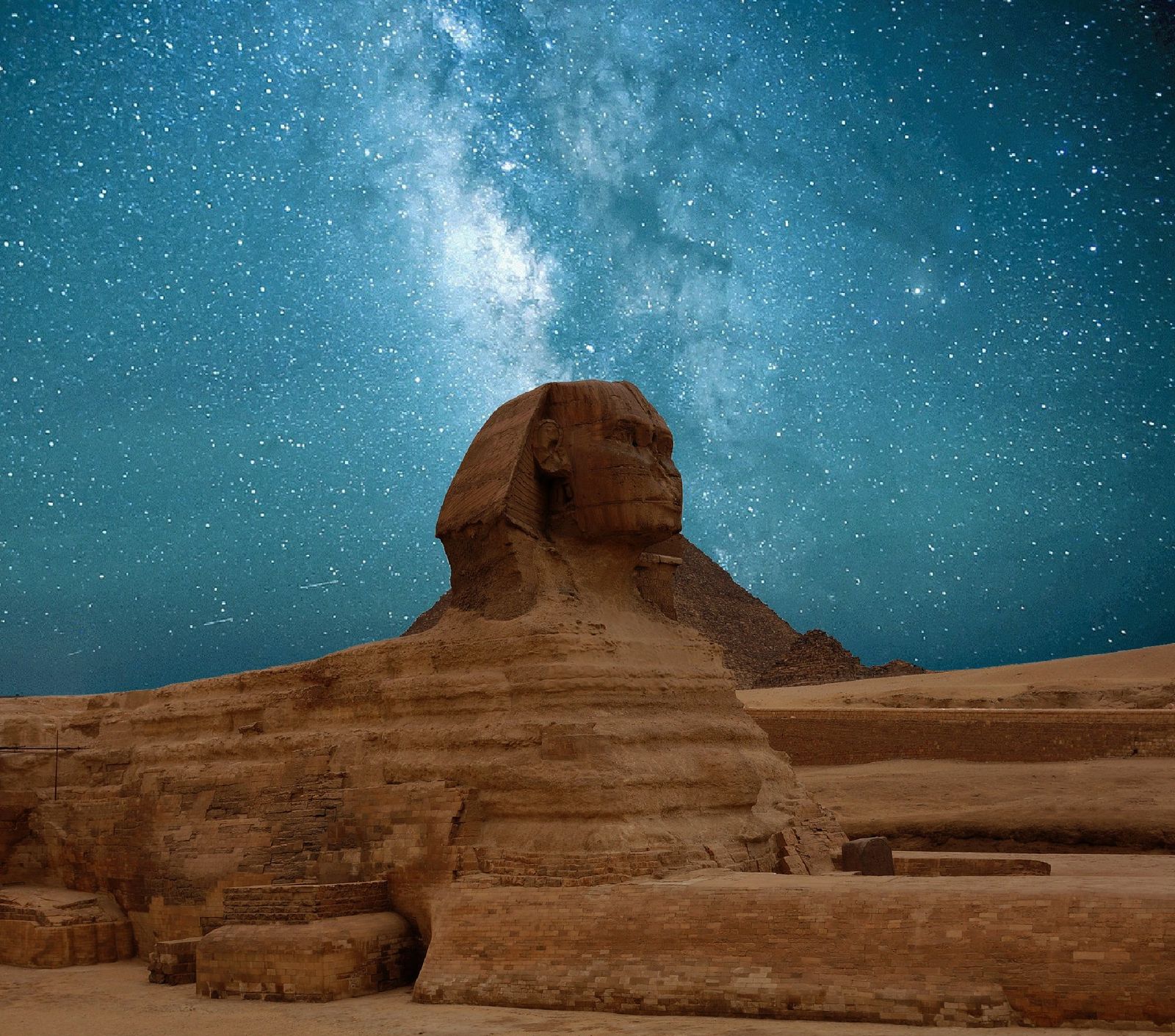
Midday Sphinx photography is less about cameras and more about elbows. The enclosure is narrower than social media suggests. If your only slot is noon, stop hunting for an empty frame that will not arrive. Step back, include people as scale, and shoot the setting: causeway logic, valley temple adjacency, the sense that the Sphinx is an anchor in a complex, not a floating mask.
Late afternoon side light from the south can cut the headdress cleanly. It also arrives with its own crowd weather. Arrive willing to wait out one bus wave rather than fighting every wave. If you care about faces and shadow, this is a light problem first and a lens problem second — see photography notes.
Do not skip the surrounding architecture because it is “less famous.” The plateau makes more sense when you remember processions and temples, not only triangles against sky.
Social layer
Most friction on the plateau is not mystical — it is contractual ambiguity. “How much for a nice ride?” invites a story. “Ninety minutes, panorama ridge and back to the Sphinx gate, total price in EGP, no extra stops” invites a number.
You do not owe anyone a performance of anger. A calm refusal repeated once is enough. If you do hire, lock: route, duration, currency, total, and end point. Photograph the agreement in chat if you arranged via driver. Tip for real help and patience in traffic, not for inventing urgency.
| Window | What it is good for | What breaks |
|---|---|---|
| Opening–09:30 | Walking, long views, fewer elbows | Oversleeping; slow ticket extras |
| 10:00–13:00 | Still workable in winter | Summer heat; Sphinx scrum; short tempers |
| Late afternoon | Side light, warmer stone color | Exit traffic; golden-hour congestion |
| With interiors | One deep physical encounter | Trying to also “do Saqqara properly” |
After Giza
Giza is a full morning for most travelers. If you insist on adding Saqqara the same day, cut interiors, cut shopping, and accept that Dahshur probably dies. The clean pairing from Nasr City is: Giza one day; Saqqara to Dahshur another. Museum afternoons work after Giza only if you leave the plateau with legs still negotiating stairs.
Private drivers will sometimes propose “all three plus lunch plus perfume factory.” That is a business model, not a reading of your attention span. Ask for a written site list and a hard end time back at Gameat Al Azhar. If the quote cannot survive that clarity, neither will your afternoon.
For hour-by-hour sequences, use the day plans. For heat and haze by month, use seasons. For the drive itself, use transport. Questions before sunrise: [email protected] or +20224023680.